Roberto Parrondo in Handball-Planet interview: “We changed Melsungen’s mentality and made history”

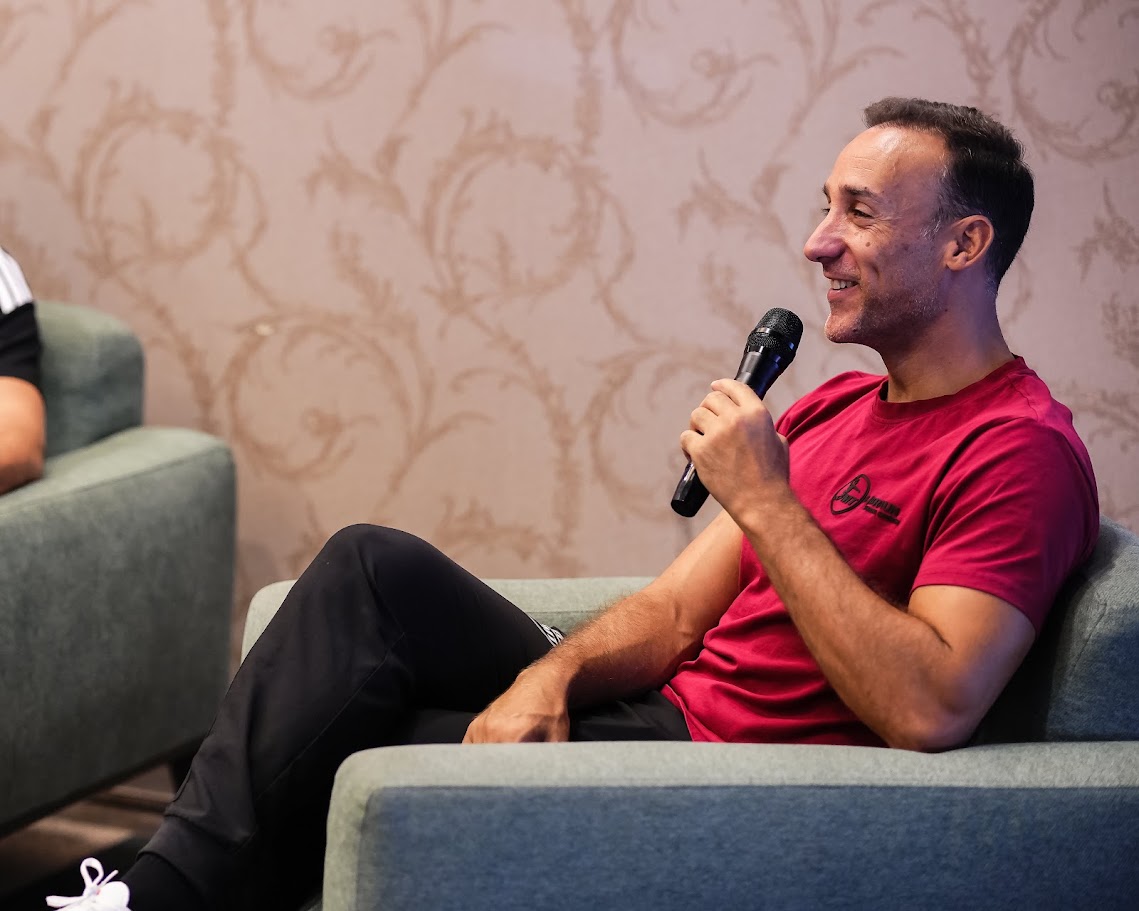
After winning the EHF European League with MT Melsungen and announcing that he will take over Paris Saint-Germain in the summer of 2027, Spanish coach Roberto Parrondo spoke at length about Melsungen’s development, the brutal competition in the Bundesliga, his decision to leave Germany, his time with Egypt and the unforgettable Vardar fairy tale.
Every new season is about loading energy, tactics and physical power. After such a fantastic end to last season and Melsungen’s first European trophy, can you feel that something has changed within the team?
I think the biggest change is in the way people see us. Now, wherever we go, people say: “MT Melsungen are the winners of the European League.” That is probably the biggest difference.
For us inside the team, however, I don’t want one match or one trophy to change the way we evaluate ourselves. If you win a final by one goal, does that suddenly make you a much better team? And if you lose it by one goal, are you suddenly worse? I don’t think so.
Sometimes you play well, sometimes a little worse, but one or two goals in one match cannot completely change your assessment of a team.
We believe we can achieve good things, but at the same time we keep our feet on the ground. We know how difficult the Bundesliga is. There are clubs with greater tradition and history, and that gives them an advantage.
Now we are also playing in the Champions League, but we have to be realistic: we did not build this squad specifically for the Champions League. Most of the biggest clubs prepare their squads one or two years in advance for that competition. We couldn’t do that.
We will see how we manage both competitions, and a lot will depend on injuries.
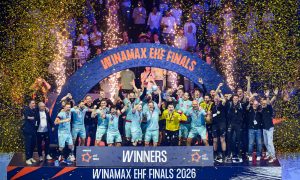
But, of course, winning the first trophy in the history of the club makes all of us extremely proud. People in Melsungen dreamed about something like this for many years. That is special.
You say the squad was not built specifically for the Champions League. Two years ago you were fighting for the Bundesliga title almost until the end, while last season you finished seventh despite winning the European League. Where do you see the real level of Melsungen?
The number of injured players can move you two positions higher or two positions lower in the Bundesliga. It makes a huge difference.
I have always said that what we did two seasons ago, being leaders and still having an opportunity to win the Bundesliga two rounds before the end, probably wasn’t our normal reality. We are not Magdeburg or Berlin.
At the same time, the first part of last season was not our real level either, because that simply wasn’t our real team.
Already during the preseason, when we realised how many players were unavailable, I went to the club and said: “We have to understand that the situation is completely different.”
I was playing preseason matches with seven players who either had not been in the team the previous season or had barely played any minutes. You cannot expect the same performances.
That is why injuries affect the real potential of the team enormously.
We made four signings. Some are also investments for the future and need time to adapt to the Bundesliga and its physical demands.
Daniel Dujshebaev, for example, can give us an important balance between attack and defence. We need players who can contribute in both phases. We also strengthened the wing position, and Johannes Golla is obviously a player who can become one of the leaders of the team. He is a top player.
I think we have built a good squad.
But right now we still have important players out and, for example, only one natural right back available. He may be one of the best players in the world, but he is still only one player.
And when the matches come every three or four days, you need depth.
Our realistic target is to qualify for Europe again. More or less, that means fighting for fifth place.
Inside the team, we always say the same thing: if one of the biggest clubs does not do its job, we have to be there and try to catch them.
But to say that over an entire season we should normally be better than Berlin, Magdeburg or Flensburg, particularly with our injury situation, would not be realistic.
Last summer we were also discussing who would win the Bundesliga. Who is your favourite this season?
The Bundesliga is extremely difficult to predict because so much depends on injuries and whether a team goes through a bad period.
But if you analyse the squads, Magdeburg are probably the biggest favourites.
They didn’t change much. They kept almost all of their important players. Sergey Hernandez left after doing an amazing job, but they brought in Dominik Kuzmanović and found a very good replacement.
Maybe they could have an issue at left back during the season, but when you have players of that quality throughout the squad, you can compensate for many things.
What do you think about the changes at Füchse Berlin, particularly in goal?
They lost two very important players, Lasse Andersson and Dejan Milosavljev.
They have brought in good replacements. Langhoff is a young player with enormous potential and is very complete, but right now he is not Lasse Andersson.
And everybody knows how good Palicka is. Of course, he can still produce amazing matches. But replacing Milosavljev, who was giving them a very stable level almost every game, is difficult.
That is on paper, of course. Then you start playing and you never know.
What about Kiel?
I think Kiel will have a great season.
They have players who can make a huge difference, and if Elias comes back at a good level, together with their other options at centre back, they will have much more control of the game.
Madsen missed a lot last season and he is a terrific player. Really, really good.
For me, Kiel are candidates to fight for everything.
You didn’t mention Flensburg.
No, I didn’t forget them!
Flensburg also have enormous potential. If we are talking purely about attacking potential, maybe they have the biggest of all.
When you have players such as Pytlick and the other quality they have in the back court, it is extremely difficult to stop them.
They are building something and, of course, everybody is also looking towards what will happen in the future.
If I had to bet on the Bundesliga winner, however, I probably wouldn’t bet at all. I really don’t know.
In the last two years everyone has expected Magdeburg and Berlin to fight for the title and Kiel and Flensburg to be third and fourth.
But things can change very quickly.
If something happens to Gidsel, Berlin lose a huge part of their potential. If Magdeburg lose Kristjansson or another key player, the same thing happens. If Flensburg get everything working perfectly, they can increase their level enormously.
For me there are four giants.
Put any of those four teams in almost any other domestic league in Europe and they would be genuine candidates to win the championship.
Behind those four there is another group: Melsungen, Gummersbach, Rhein-Neckar Löwen, Hannover…
Exactly. And that is what makes the Bundesliga so difficult.
You can say there are four giants and then there is a “second wave” from fifth to ninth place. But suddenly you realise that almost half of the league believes it should be fighting near the top.
Hannover will be interesting, especially now that Juan Carlos Pastor has had more time to establish his system.
He is an amazing coach and I am sure he will do a very good job.
But everybody invests.
Göppingen expects to fight around the top eight. Stuttgart wants at least the top ten. Every club wants to improve.
So the question is: who is supposed to have a bad season?
Does Hannover have an advantage because they are not playing in Europe?
Absolutely. Hannover and Rhein-Neckar Löwen have a significant advantage because they are not playing in Europe.
Last season we could really feel what European competition does when injuries start piling up.
You cannot rest. You have less time to prepare. You are travelling constantly.
And then you lose games by one or two goals.
In the first half of last season, we lost a lot of points in matches decided by one or two goals. When you add everything together, it becomes a major difference in the table.
Gummersbach also had the advantage of being able to focus more on the league in previous seasons.
In the end, the team that is a little luckier with injuries and can maintain its rhythm for the longest period will be up there.
I cannot tell you now that Gummersbach will definitely finish above one team or another.
But I really like them.
They are extremely strong at home, they have a great atmosphere, and people sometimes forget their history. Yes, they were in the second division a few years ago, but go further back and you find one of the biggest clubs in European handball history.
Tradition matters.
Having that history behind you helps.
This is going to be your final season in the Bundesliga. Why did you decide to leave this “NBA of handball”? From a sporting perspective, what are you still looking for?
To explain why I am leaving, maybe I first have to explain why I came to Melsungen.
I was with Egypt. We played the Olympic Games in Tokyo and I think we produced an amazing tournament.
I still remember the semi-final against France. We missed 19 shots, if I remember correctly, and around 15 of them were from six metres. Vincent Gérard was incredible.
We played very well, but we lost.
Afterwards I was disappointed, of course, but I was absolutely convinced we were going to win the bronze medal against Spain.
And this is strange for me because I am normally one of the most pessimistic coaches in the world! I am always thinking about all the negative scenarios that can happen.
But I was sure we would win.
Then, a few hours after the semi-final, the doctors came and told us that Ali Zein had broken his hand. In that moment I thought: “Now we cannot win.”
You were planning to stay with Egypt at that point?
Yes.
When I accepted Egypt, there was a clear challenge. We wanted to qualify for the Olympic Games, and to do that we had to win in Tunisia. Egypt had never done that before.
That was a target for me.
As a coach, I need a challenge.
We did it. We qualified. We had an amazing period.
At the beginning, more than 80 percent of the national-team players were playing in Egypt, so we could train together every week. During international periods we could have longer camps. From December onwards we could really prepare for tournaments.
I felt like a coach every day.
But that situation changed.
After the Olympics, around half of the players were already moving abroad and several more were expected to leave afterwards.
Then I started thinking: “What am I doing here now?”
Of course, I was in a good situation and I enjoyed Egypt enormously, but as a coach I wanted to coach every day.
Then Melsungen called.
And what attracted you to Melsungen?
The first thing I asked was: “What do you expect? What do you want?”
Everyone had been saying for years that Melsungen invested a lot but did not achieve enough.
The club told me they understood that things had to change and that they wanted a long-term project.
That interested me.
Before accepting, I called friends in Germany and France, people who knew the Bundesliga and knew the club. I asked everyone for information.
To be honest, almost everything I heard was negative.
People told me the players didn’t train hard enough, that they only cared about money, that the club was badly organised…
Everything.
That is why my conversation with the people responsible for the club was very direct: “Do you want to win tomorrow, or do you really want to change everything?”
They told me they knew they needed change.
For me, that was a great challenge.
And now you feel that challenge has been completed?
Yes. That is probably the main reason for my decision.
At Melsungen, I feel I did the job I came to do.
Of course, my work is not finished yet. I still have this season. But when I look at the original challenge, I think we achieved what we wanted.
I have a fantastic connection with the players. We created our own mentality.
I think we changed the image of Melsungen a lot.
People may discuss whether we are better or worse as a team from one season to another, but nobody says anymore that these players don’t fight.
That image disappeared.
At the same time, I had been speaking with the club for years about things that needed to improve structurally.
I am extremely happy with what we achieved in Melsungen. I think I gave the club what they trusted me to deliver.
Then Paris came.
What is the sporting challenge that attracted you to Paris Saint-Germain?
I don’t want to talk too much about Paris right now, out of respect for them because they have a coach and players, and also out of respect for Melsungen because Melsungen is my club today.
But the basic challenge is clear.
The idea is to build a competitive team again, to be in a position to qualify for the Champions League and then compete seriously there.
Nobody can promise a Final Four.
In the Bundesliga you have four or five teams thinking about winning the league. In the Champions League you can easily have eight, nine or ten teams believing they can reach the Final Four.
That is the level.
The idea is to create a squad capable of competing with the best.
That is my personal challenge.
In the same way that I wanted to take Melsungen into Europe and prove we could beat top teams, my challenge in Paris will be to build something competitive at the highest level.
It is a huge challenge, particularly considering the club’s results in recent seasons.
But if you move somewhere new, you need a big challenge.
Isn’t it strange knowing so far in advance that you will be coaching another club? We now see coaches and players signing contracts one or even two years before moving.
For me, it is quite normal.
I focus on what I have to do today.
Maybe in March or April I will start getting nervous, but that will be because of moving houses, organising the family and all those practical things.
Sporting-wise, I have no problem separating it.
Handball has developed a special transfer market.
In football, if you want a player under contract, you pay a transfer fee. You buy one player and sell another.
Handball does not normally work like that.
Instead of paying a million euros today, clubs speak to players one or two years in advance and secure them for when their contracts expire.
And if you are a club like Melsungen, you have to understand the market.
If you wait until the last moment and then offer a player the same money as a bigger club with a greater tradition, why should he choose you?
You have to move earlier.
When I finished my playing career, things were different. The best players might agree their next club several months before the end of their contracts.
Then it became one year.
Then two years.
This is simply how the market works now.
How is Johannes Golla integrating into the team?
Fantastic.
He has only been with us for a few weeks, but I had already heard great things about him, not only as a player but also as a person.
And everything I heard was true.
He trains every day. Even when he gets free time, he goes to the gym.
I’ll give you a simple example.
In one of our first preseason games, I divided the team because we had another match the following day. Some players were supposed to play 20 minutes, others 40, so we could distribute the load.
Golla was supposed to play only 20 minutes.
I told him he didn’t need to warm up for the second half because he would come on after ten minutes.
He came to me and asked: “Can I start now? My back is getting a little cold.”
I told him: “Johannes, you are only supposed to play 20 minutes today.”
He said: “I can play 30, no problem.”
I know he can play 30. I know he would happily play 40!
But my job was to distribute the minutes.
That tells you everything.
He is a top player and someone who gives everything.
He already knows the city and some of the players from the national team. Everyone respects him, and he came here with the mentality of working for the team.
Looking back at Egypt, is there anything you regret?
Only one thing.
The 2021 World Championship was played without spectators because of COVID.
When I look at the way we played and the performances we produced in an empty hall, that is something I really regret.
I have seen videos of that arena full of 20,000 crazy Egyptian supporters.
I wanted to experience that so badly.
Before the tournament, if you had told me we were going to do something extraordinary, I would probably have said: “I don’t know. I think we can play well.”
But knowing now how we performed, I really believe that with 20,000 Egyptian fans behind us, we could have reached the final.
That is my one regret.
Everything else was a decision.
I decided to go to Germany because I needed a new challenge as a coach.
I would have liked to combine the two jobs, but because of federation and government conditions, the national-team coach had to live in Egypt, so it wasn’t possible.
But I have no regrets about Egypt.
I have fantastic memories.
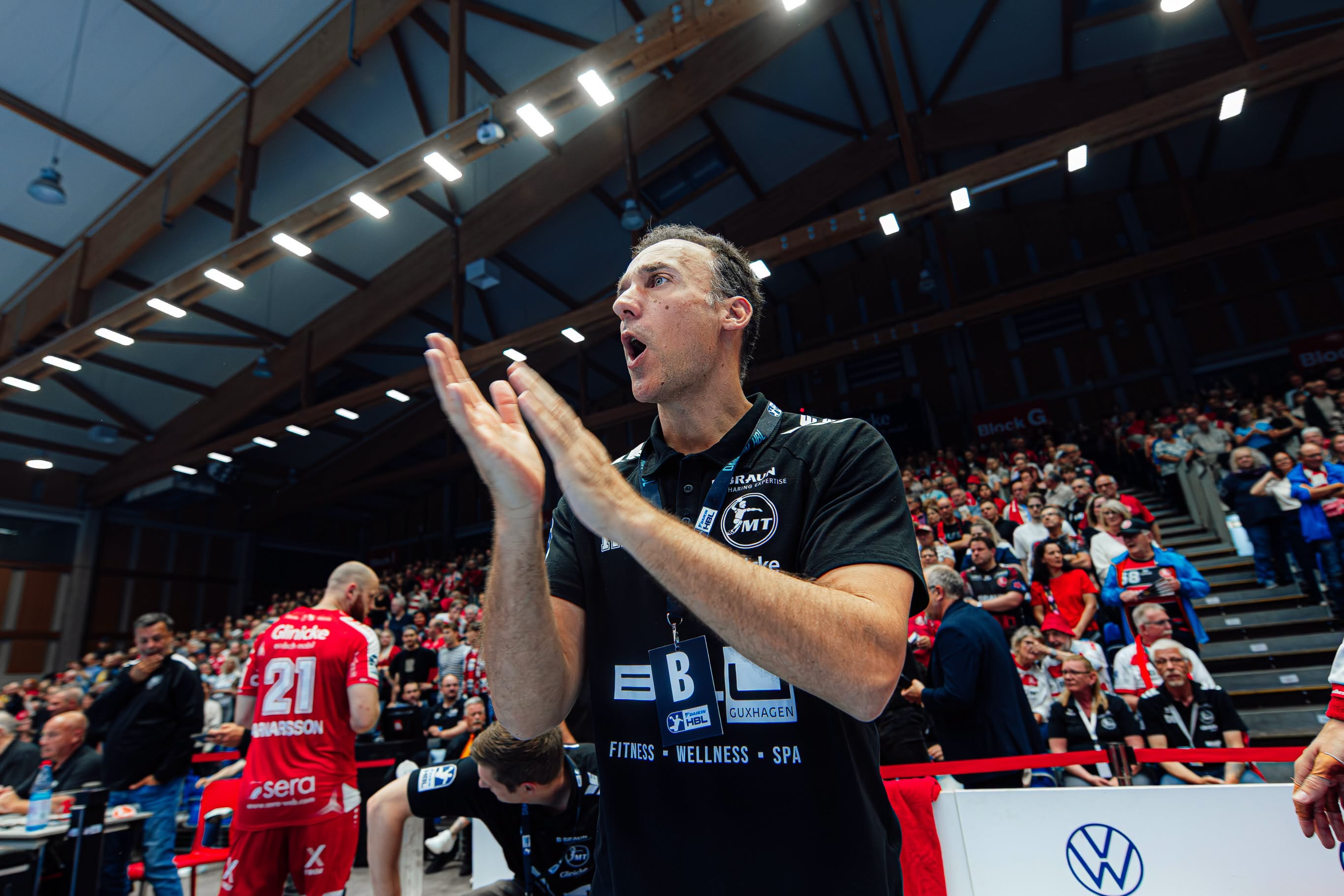 You have coached a national team and now you are in the Bundesliga, where teams are constantly travelling and playing. How much have you had to adapt tactically and in terms of player management?
The biggest difference is the time you have to work.
During the season, you cannot really train and develop big tactical concepts. The main period when you can properly work is preseason.
That is why you have to prepare extremely well at the beginning.
During the season, you mostly make smaller changes.
It was harder for me in the beginning because I came with a completely different style and the players had their habits.
Now the players who have been with me for a long time are much more flexible.
We can say: “Normally we do this, but in ten days we are going to do this instead.”
They understand it.
Sometimes you have only one training session to prepare something. You cannot build a completely new concept in one practice.
So you use video, meetings and small tactical adaptations.
That is why it is important to have players who are used to working like that.
My first two seasons were much more difficult. Now I can change things much more easily.
So the biggest differences at the top level are often small details?
Exactly.
People who do not understand handball deeply may look at a team and say: “They always play the same.”
And, yes, maybe 80 percent is the same.
But the decisive difference can be in the remaining 20 percent.
Instead of attacking one space, you attack another. Instead of giving the ball to the line player in one moment, you do it in another.
The structure can be the same, but you change the details.
There are teams where you analyse something and know they will probably still do exactly the same thing in one week, two weeks or even one month.
We try to be very well prepared because, against the best teams, sometimes we simply aren’t good enough to beat them by playing exactly the same way.
You have to find surprises.
Small tactical details.
Something that gives you an advantage.
When you look back at Vardar, does it still feel like a fairy tale?
Yes.
And we knew from the beginning that the situation would be difficult.
Actually, I moved to Skopje one year earlier because of the women’s team.
Timur Dibirov’s wife was coaching them and she felt she might need some help with the tactical side.
I was very clear: “I don’t know women’s handball specifically, but handball is handball.”
We divided the responsibilities very well.
At that time I already knew there were problems with Raúl González and the men’s team.
Raúl told me things were complicated.
I was finishing my playing career and thinking about becoming a coach, so I thought: what do I have to lose?
I had an opportunity to join a club that had been in the Final Four and wanted to compete at that level.
My wife and I talked about it.
They would pay for our apartment and the children’s school.
I said: “If I don’t get a salary, I can survive for one year. I cannot survive like that for four years, but for one year, yes.”
So we took the risk.
Then everything happened.
The women’s team disappeared because of financial problems and, almost at the same time, I had the opportunity to take over the men’s team.
I knew there would be problems again.
But how could I say no?
I accepted the risk.
How did you keep the team together when salaries weren’t being paid?
To be honest, the players did an incredible job themselves.
I almost did nothing compared to what people sometimes think.
They managed each other.
There were moments when one player would have a terrible week. He wasn’t being paid, he had family problems, problems with his girlfriend or wife, and he simply didn’t want to train.
The others understood.
They would give him one, two, maybe three bad days.
Then they would tell him: “Okay, now it is finished. Come back.”
Everybody had their turn.
That was how the group survived.
I remember one situation with one of our younger foreign players. At one point, around February or March, he said he would not come anymore because he wasn’t being paid.
The players spoke to him.
After a couple of days they basically told him: “You are here with us.”
It was crazy.
But that was the mentality of the group.
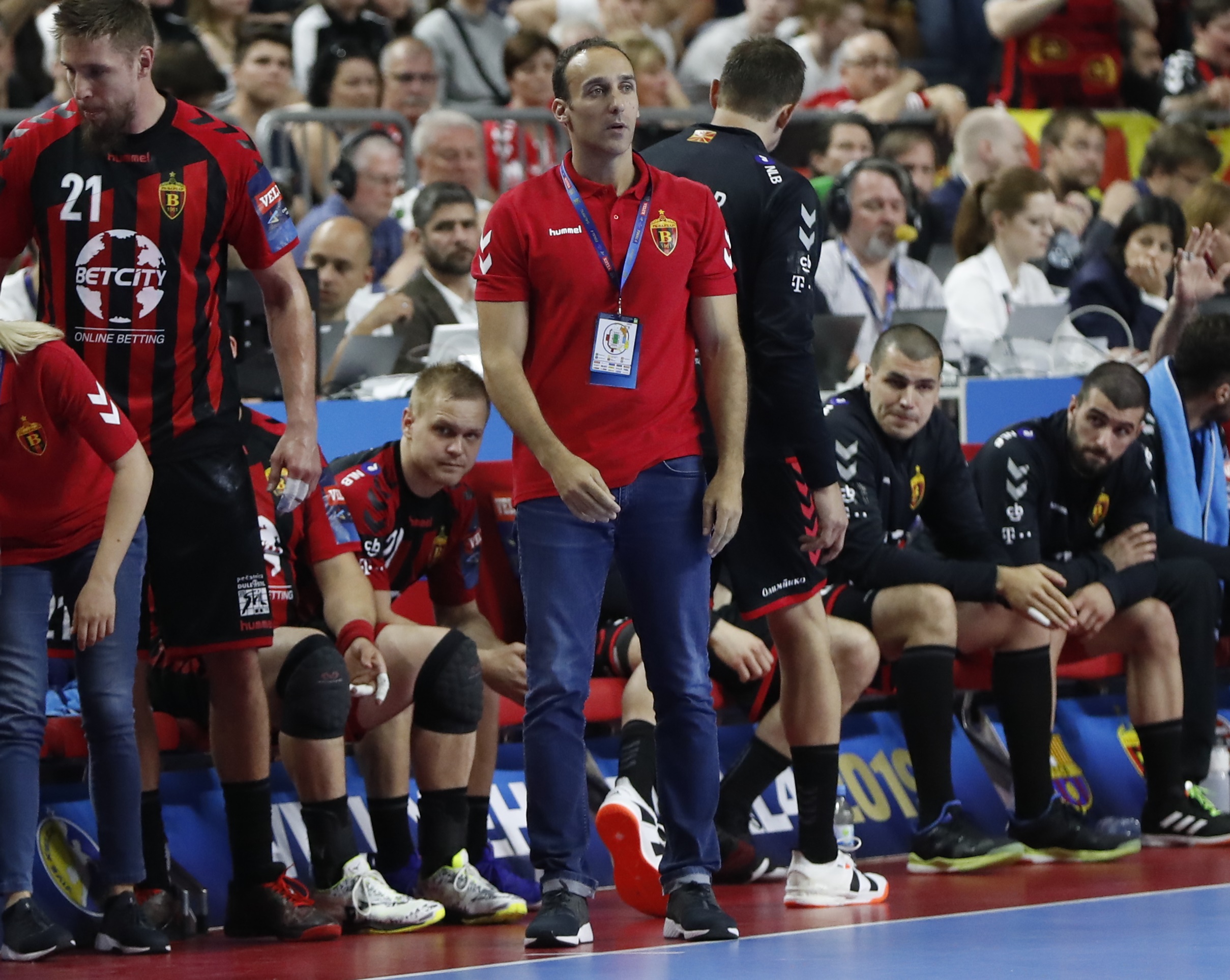
Velux EHF Champions League – Final 4 2019, HC Vardar vs Barca Lassa in LanXess Arena, Keln, Keln 01.06.2019. Mandatory Credit © Jozo Cabraja / kolektiff
What is the one Vardar moment you will never forget?
The home match against Szeged in the Champions League quarter-final.
That week was unbelievable.
We knew that it could be the last match in the history of the club.
Around ten days before the game, I received a call from the sporting director asking me to come 15 minutes before training because we had to talk.
I went there and he told me: “I want to tell you before I speak to the players. Next season there may be no club anymore. It is finished. The players will be free to look for new clubs.”
Can you imagine?
We had spent the entire season fighting through everything, and now, just before the most important game of the season, when we were fighting to reach the Final Four, the players were being told the club might disappear.
We sat down in the video room and they received the news.
I told them: “Guys, go home. Take today to understand what has happened. Tomorrow we come back.”
Some players said: “No, we want to train.”
I said no.
In that moment, training made no sense. Their heads were somewhere else.
The seven or eight days that followed were crazy.
Extremely hard.
And then we went onto the court.
The atmosphere was unbelievable.
Everybody in the arena knew it might be the last European match this club would ever play.
People were crying.
I will never forget it.
I think most of the players who were there would tell you the same thing.
The return leg in Szeged became very difficult.
Yes.
At halftime I think we were around seven goals behind and suddenly everything was on the edge.
But in the second half we started coming back.
Seven became six, then five, then four.
Around the 50th minute we were only two goals behind.
I was so focused on the game that I didn’t even realise what that meant for the aggregate score.
At one moment somebody looked at me and said something like: “Can you count? Relax!”
Then I realised: “Okay, we still have a very good aggregate advantage.”
But during the match you don’t always process these things normally.
And the famous press conference afterwards? Did you ever repair your relationship with Juan Carlos Pastor?
We have met each other many times since then.
I didn’t take everything that happened too seriously.
There was enormous pressure on Szeged.
Everyone had been saying throughout that season that they were going to reach the Final Four. They were playing really well and were very strong in the group stage.
Then suddenly Vardar had all these problems and everyone thought: “This is Szeged’s chance. Vardar is disappearing. Szeged has to go to Cologne.”
That created extra pressure, especially for Pastor.
I knew from people around the club how enormous the expectation was.
I didn’t like what happened afterwards, of course, but I can understand the circumstances better now.
After so many years, when we meet, we can talk normally.
No problem.
Then came Barcelona in Cologne in 2019. You were six goals down at halftime of the semi-final. What happened?
There was one very clear tactical instruction we had prepared.
We had actually been talking about it for almost two weeks.
We handled that situation really well in the first game, but in the first 30 minutes against Barcelona we didn’t do it.
At halftime I was angry. I asked them: “What are you doing?”
But I also told them something else: “We are six goals behind, but this score is not fair.”
I really believed that.
We hadn’t played badly enough to be six down.
We had missed two completely open shots against Gonzalo Pérez de Vargas. We had other clear chances. Our goalkeeper wasn’t having his best first half.
I told them that, in a normal situation, we should maybe be losing by two.
So the message was: we are actually playing well. Keep going.
Later, when I watched the game again, I still thought I had been more or less right.
Then the character of that team appeared.
We had prepared one or two things for a situation where we had nothing left to lose.
The idea was: if we need to take risks, then we take all the risks and go until the end. Don’t allow them to breathe.
Six goals became five.
Five became four.
Four became three.
And at some point I think Barcelona started thinking: “What if…?”
That changes everything psychologically.
And we had players such as Stoilov, Skube, Karačić, Moraes… When those guys felt there was a chance, suddenly it was: “Here we are. Let’s go.”
That was an extraordinary group…
It was.
It felt like a parallel universe.
Nobody believed in us.
At the beginning of the Champions League season there were rankings of the ten best teams in the competition, and Vardar wasn’t even there.
For me, that became a motivational tool.
I could show it to the players: “Look, apparently we aren’t even a top-ten team. Nobody knows who we are.”
Sometimes these things help.
When you took over from Raúl González, did the players accept you immediately? Did the fact that you had worked with Raúl help?
Yes, it helped me a lot.
Raúl had already introduced many things, and our handball philosophy was similar.
Even with the language, it helped.
A lot of the Macedonian handball terminology I learned was simply from asking Raúl: “How do you say this? How do you say that?”
The words and expressions were similar enough for the players.
Our personalities were also similar in some ways, and the basic idea of the game wasn’t radically different.
So it wasn’t a huge change for them.
Of course, players always look at a new coach and think: “Okay, let’s see what this guy does. Then we’ll decide whether we believe him.”
That is normal.
It doesn’t matter what your reputation is. Players want to see whether you really understand handball and whether your work makes sense.
From the beginning, though, the players trained well and wanted to work.
The start of that Champions League campaign was crucial for us.
We won away in Montpellier. Then we won at home. Then we went away again and won.
Suddenly the team had confidence in the coach and the coach had confidence in the players.
That helped enormously.
And strangely enough, all the problems we had could have destroyed the group, but instead they kept pushing us closer together.
We stayed together until the crucial moments: the quarter-finals, the Final Four.
We were there.
You are now only the third coach in handball history, after Alfreð Gíslason and Bennet Wiegert, to have won both the EHF Champions League and the EHF European League. How does that sound to you?
When you tell me that, of course I think: “Okay, great. We obviously did something good.”
But I don’t spend much time thinking about records like that.
After winning the European League with Melsungen, the main feeling I had was peace.
It was different from Vardar.
With Vardar there was enormous excitement. The celebration was crazy. Everything surrounding that victory was unbelievable and unforgettable.
With Melsungen, after the final, I felt something closer to: “We did it.”
For two or three years I had been carrying so many things inside.
I don’t talk too much. I listen. Somebody tells you one small thing, another person tells you something else, and you remember these things.
At Melsungen, Barbara Braun-Lüdicke and her family care deeply about handball and about this club.
I have worked for many presidents, owners and CEOs, people who want everybody to know: “I am the president.”
But I had never experienced somebody standing in front of you crying after a victory because it meant so much personally.
Her husband passed away not long after we arrived, and our families had developed a good connection. Barbara told me several times that he had always believed I was the right person for the club.
Those things stay with you.
That is why I felt I needed to give something back to Melsungen.
When we won the European League, my feeling was: “Yes. We did it.”
Not for me.
For all of them.
Many of your players had never won a trophy before. Did that make it even more emotional?
Absolutely.
Maybe half of the squad had never won a trophy.
And I know that feeling because, as a player, I wasn’t someone who had won everything either.
There were players who had spent six or seven months injured through no fault of their own.
I remember Timo Kastening after we lost the German Cup Final Four the previous year.
We had reached another decisive moment with two or three important players injured.
Afterwards he came to me, almost emotional, and said: “I am so sorry for you that we couldn’t win this for you.”
I remembered that.
So when we finally won, I thought about players like him.
Yes, we did it.
That was amazing.
And when I talk about a team as a family, I don’t mean only the players.
I mean their families as well.
My wife and daughters know me better than anybody. They also know that sometimes at home I can be an idiot! We can be having lunch, they can be talking to me, and mentally I am somewhere else thinking about handball.
The families are the people living with us through all the bad moments.
So when the good moments finally arrive, they deserve to experience them too.
That is much more important to me than saying: “I am the third coach to win these two trophies.”
Of course, when you tell me that statistic, I realise we have achieved something special.
But what I remember most are the people with whom I achieved it – concluded Roberto Parrondo.