Franjo Bobinac: “Handball needs a stronger voice within the Olympic family”

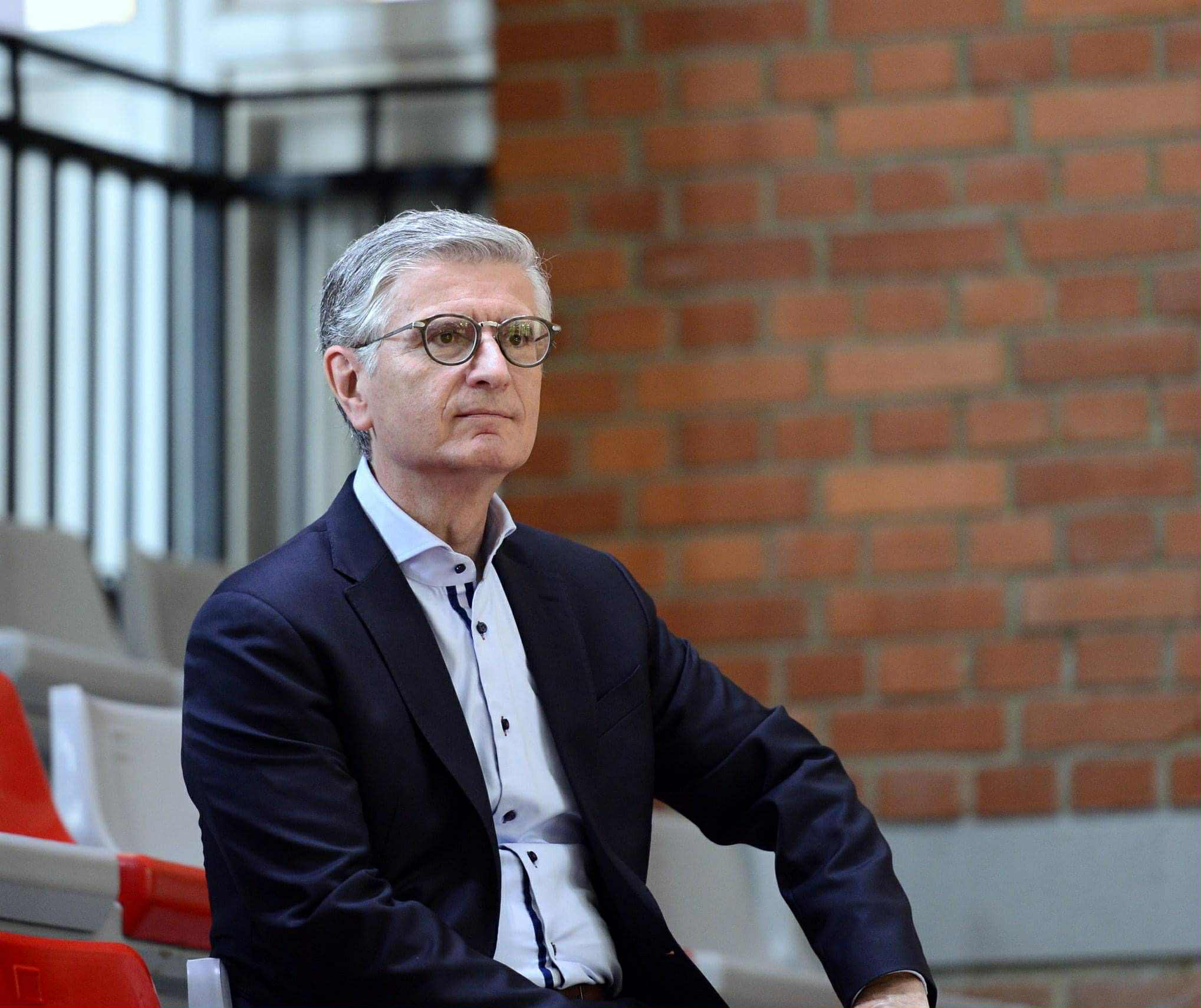
The Electoral Congress of the International Handball Federation (IHF) in Cairo next December will be an exciting one, given that the current president, Hassan Moustafa, will face challengers with serious sports and business backgrounds. After Germany’s Gerd Butzeck, Franjo Bobinac has also declared his intention to become the head of world handball. A long-time leader of the Slovenian Handball Federation, a successful businessman through the Gorenje brand, vice president of Hisense International Co, and for the past three years president of the Slovenian Olympic Committee, Bobinac is ready to offer his knowledge and experience for the development of handball as a truly global sport.
What were the reasons to join this race for the IHF President?
– I think I can summarize those reasons into two main reasons. The main motivation behind my candidacy is the urgent need to strengthen our beautiful sport across multiple areas, securing its Olympic status and taking handball to the next level.
And also, I must admit, there were so many National Federation representatives and other stakeholders, not only from Europe but also from other continents, who really encouraged me to step forward and to lead the necessary change around international handball.
In fact, sport has developed tremendously in the last 30 years, including handball, thanks to numerous stakeholders in handball organizations, but also inside of the IHF. However, if we are honest, other team sports have advanced even more significantly.
I truly believe we need to honor our foundations from the past inside of the IHF. However, we cannot let them limit us, because achievements from the past cannot limit us in embracing necessary changes and fully using the potential of handball in a completely changed environment. Fans, partners, all stakeholders expect more, and also handball needs a much stronger voice within the Olympic family.
What are the main issues, what are the biggest problems of handball at the moment? What do you see, what can be better?
First of all, my vision and a big goal is that handball becomes one of the strongest global sports, with an enhanced Olympic position. Currently, it is far from being a truly global sport and its Olympic position is very fragile.
The reasons why I was approached by so many stakeholders from Europe and elsewhere, are most probably related to my past achievements. My leadership experience spans from being the president of the Slovenian Handball Federation for 14 years, where I helped host major international events, including the EHF EURO.
As a member of the EHF Executive Committee, I also gained deep insight into sports governance. On the business side, for many years I was president of Gorenje, and also vice-president of Hisense International. We built partnerships all around the globe, including sponsorships in handball and other sports.
Currently, I am the president of the Slovenian Olympic Committee, with an active role inside the International Olympic Committee and European Olympic Committees. I believe this uniquely positions me to bridge the gap and to strengthen the bond between handball and the Olympic movement.
Back to your question—what needs to be done. In the next couple of days I will send to all member federations my manifesto, which is just about finalized. In this manifesto I have defined six key areas where we must act boldly and immediately.
Can you outline those six key areas?
- Yes, briefly:
- Reinvesting funds – Giving back to National Federations the money that was earned by handball. We need to reinvest the revenues generated from IHF competitions to the National Federations to support the development of handball globally.
- Governance and transparency – I am proposing to limit mandates of IHF officials, set age limits, and introduce stronger transparency regarding the use of funds.
- The game and its stakeholders – We must care about the athletes, their health, and their post-career life. At the same time, we must review the rules and regulations to make the game simpler, more transparent, and easier for fans to engage with. Greater fan engagement will also attract more sponsors, which means more revenue reinvested into handball.
- Stronger cooperation – We need more cooperation across all National Federations, and sharing best practices globally.
- Stronger voice to all member federations – We will prepare a five-year strategy to outline priorities and focus areas, giving the sport a clear direction, and in this process we will widely engage with all our members and stakeholders.
- Enhanced partnerships – We need partnerships with top global brands. Right now, we have good partners in equipment and services, but we lack big global sponsors. We must also strengthen our representation in the IOC to secure our Olympic status. Also, we shall use viewers engagement techniques for attracting more fans and for better engaging with them.
These six key pillars, with concrete activities, will be presented in detail in my manifesto. But this is just the beginning, because my candidacy is the start of a dialogue with stakeholders. My program will also be enriched with good ideas from that dialogue inside the handball family.
How will your campaign look, given there are less than three months until the Congress in Cairo? Will you visit countries or hold conferences?
- Yes, this is of course a relevant issue. I am opening a dialogue through different channels: meeting in person, conference calls, video conferences, and also a lot of traveling. I will do my best to visit different continents and countries, either individually or in groups.
I have already spoken to some important stakeholders in Europe at our meeting last weekend. Some of them I know well, others I met for the first time. This was just the first contact. Now I will continue, visiting Asia, Africa, Oceania, South and Central America, and North America.
My goal is to build personal contact. I want all our members to understand that I respect the past achievements, but I also want to build the future together. Based on my international experience in sport, business, and Olympism, I believe I can really bring value. I can lead and act as a catalyst for further development.
And always, I will take decisions based on the best interest of handball and the member federations. That is why I wrote at the end of my manifesto my commitment: to connect, to communicate, and to act. Connecting with stakeholders, communicating by also listening to their needs, and then acting in the best interests of handball.
You have strong Olympic connections. There are media stories that handball’s Olympic status is in danger. Is this true? Should we worry? And what about beach handball or a possible urban discipline?
– We are not the only ones worrying about this issue. Many National Federations approached me with the same question. Everybody is wondering what the future will be. Being an Olympic sport is essential—it is the dream of every player and coach to participate in the Olympic Games.
That is why we must strengthen our bond with the Olympic movement. This process must start now, in a very organized and structured way. I believe I can help start this process in a strong way, ensuring indoor handball keeps its Olympic status for decades to come.
At the same time, beach handball is an extremely attractive discipline. It has great potential worldwide, including in countries where indoor handball is less viable. It is really a pity that we didn’t succeed in getting it into the Games already. We need to continue to explain and convince decision-makers in the IOC and in future organizing committees that beach handball deserves a place.
And why not also explore other forms of handball in the future, like urban versions, outdoor playgrounds, or street formats? But right now, the priority is to secure indoor handball and push for beach handball. For children especially, the goal is to encourage them to play in any environment—indoors, outdoors, on the beach, or on the street, as long as it is safe. That grassroots development is crucial.
There is a big gap between Europe and other continents in handball, unlike sports such as basketball or volleyball. How can handball grow in the USA, China, India, and elsewhere?
– This is clear to me. First, we must reinvest money into National Federations, especially those struggling with resources. Second, we need to share best practices. Europe is very strong and can be a great benchmark, but there are also good examples in Asia, Latin America, and Africa. We must learn from each other. Also, we shall build a stronger rotation system for IHF competitions to include new organizers worldwide.
I plan to organize learning systems for players, coaches, and officials, and also meetings of executive committees from all six continents. Until now, they only met at Congresses, which is not enough. I will also strengthen cooperation among all national federations through collaborative development programme where best practices are shared in various fields, including coaching seminars, women handball workshops, refereeing seminars, event organization, digital and sports marketing etc.
This combination—reinvesting funds, sharing knowledge, and improving cooperation—will help handball become truly global.
However, we also need to simplify our rules. Today, even experts struggle with things like passive play. How long does it last? When exactly does the referee raise their arm? These things are too complicated. We need to think seriously about introducing a shot clock. Simpler rules will make the game easier for fans to follow, leading to better fan engagement, more sponsors, and more money for reinvestment into handball.
What would be your final message?
– Through my leadership experience in sports administration, international business, and the Olympic movement, I believe I can act as a catalyst for change. My manifesto is only the beginning of a dialogue. Together with all member federations, respecting the past but boldly moving forward, we can secure handball’s Olympic future and make it truly global – concluded Bobinac.









Pingback: Elecciones a la IHF: propuestas para el balonmano femenino