BLOG: Can Berlin Survive Its Own Revolution?

WRITTEN BY Zika Bogdanovic
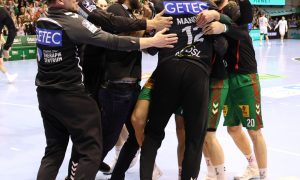
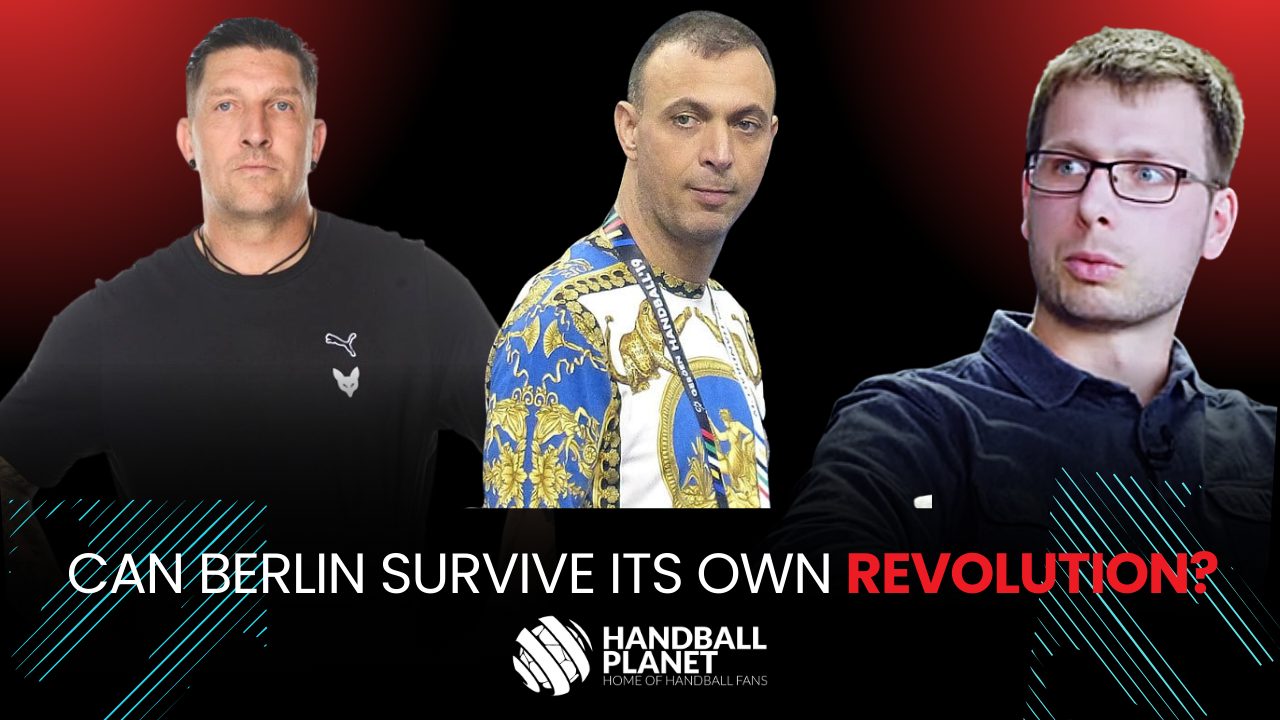
The number one theme by which the start of the 2025/26 season will be remembered is the drama in Berlin – the express dismissal of Jaron Siewert and Stefan Kretzschmar by Bob Hanning, and the appointment of Nikolaj Krickau to the dual role of head coach and sporting director. What exactly happened, apart from the messages from Berlin that “this was the hardest decision” and that the coach “went to the club on that Tuesday to sign his agreed new contract but got fired instead,” we will never know. But we can deal with the consequences.
Was Jaron Siewert, the club’s child, the embodiment of the Füchse philosophy, the coach who brought the first ever title to the trophy cabinet, in fact the victim of a war between Bob Hanning and Stefan Kretzschmar? Could he have survived even when Kretzschmar decided not to wait for charity from Hanning, who was stalling with the extension of his contract that was valid until the summer of 2026? Contracts, not only theirs but also of several other players like Milosavljev, were hanging in the air, becoming media stories and a space for speculation – with the burning question: what does the “Handball Napoleon” really want?
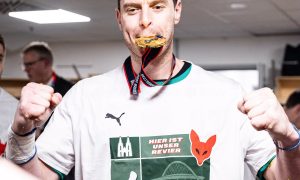
In the short term, Bob Hanning gambled and lost everything. He lost a piece of the club’s identity embodied in “the little guy with glasses” who walked the whole path from start to finish – the reason Füchse Berlin was recognized in the handball world as a factory where talent is produced, not a stable where only the finest horses are brought in.
He also lost what Stefan Kretzschmar carries outside the court – still one of the most recognizable faces in the world of handball, a silhouette standing alongside “eternal” figures like Vujović, Dujshebaev, Karabatić, etc. That invisible layer of personal brand woven into the urban story of Germany’s capital, that doesn’t come from Denmark or Serbia, it’s not learned in school – and Kretzsche had it. In other words, Berlin was “cool.”
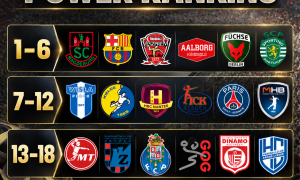
Why was the pyramid that had placed Berlin in the world’s TOP 5 clubs dismantled? After last season it was clear that in the next five years the “Foxes” would be taking trophies and playing finals by a goal or two. From the perspective of the handball vox populi, this looks like absolute suicide. Is Berlin really a toy in the hands of one man-director, who basically said: “OK, this was good, but it got a bit boring. Let’s change the actors and do it all over again”?
Of course, nobody can take away from Bob Hanning his absolute contribution to creating this masterpiece, but…
Was it really to be expected that Berlin’s sporting director would wait until the very last day of his contract without knowing his future – in a moment when the club was at its historic sporting peak?
And how did Hanning even think he could handle a situation where both his head coach and sporting director had no new contracts, while titles kept rolling in one after another? How to explain that rationally? To the fans, to the players, to the media, to the handball community? It’s simply impossible that this was one of the “planned scenarios” – to decapitate the team, draw the wrath of the fans and the wider public, and give the new coach, whoever it may be, a target on his back even before he runs his first training session.
The global perception of Berlin has also changed. Overnight it went from “what a great story” to “let them lose every single game,” in the hope that the boss will realize he cannot treat living people that way.
Nikolaj Krickau is neither the best nor the worst coach in the world, but even if Jesus Christ himself had arrived two weeks ago in Max-Schmeling-Halle, stood before the fans and entered the locker room saying, “Good morning, I’m your new coach,” the negative energy could still be cut with a knife. Whether someone is irritated by his aggressive gum chewing or his déjà-vu Jakobsen-like posture is subjective, but what the former GOG and Flensburg coach has taken onto his back is neither easy nor grateful.
Just as Siewert was the “collateral damage,” so Krickau starts with his feet in the mud, with the eternal question hovering above him: “What is this guy doing here?” and whether this was part of a bigger plan for 2026 that just came to light prematurely. Along those lines, the extra-pressure is also on Mathias Gidsel, to “defend” both the roster’s status and his former mentor, who has not started well. It was evident in Gummersbach, where the flying Dane tried single-handedly to save a sinking ship.
Two defeats at the start clearly signal how the team reacted to all of this. Can Berlin stabilize, or will this Bundesliga season be consciously sacrificed – in a situation where maybe only Magdeburg have more reason to hope for the trophy, while Kiel and Flensburg are still a step behind?
And every coach requires time. Fairness demands he be given room to implement his ideas. This excellent roster will inevitably undergo changes, and changes demand both patience and the right to make mistakes. Will “Pytlik’s son” arrive to join “Gidsel’s son,” Krickau’s pupils uniting, while Lasse Andersson leaves just as he’s playing the handball of his life, how will stay on the goal-line – we shall see.
What Krickau’s ideas are, and how much they will cost Berlin in the short term – and how much the club might profit in the long run – we can only speculate.
Meanwhile, in Magdeburg they ask whether the team can win every single match and claim the title – just like Kiel’s legendary “Überflieger” season in 2012. Naturally, coach Bennet Wiegert modestly rejects such talk, claiming the league is much more balanced today than 15 years ago.
True.
But I’m sure he’s stroking his beard while reading all this – and that he has already chosen the new color he’ll dye his hair when the “plate” once again arrives at GETEC Arena…