EHF European League at Halfway Point: Flensburg Set the Pace, Izviđač Impress, Pelister Disappoint

Written by Zika Bogdanovic
Flensburg, Kadetten Schaffhausen, Limoges, Slovan Ljubljana and Torrelavega are the five teams with perfect records after the first half of the EHF European League group stage. At the other end of the spectrum, Tatabánya, Karviná, CSM București, FH Hafnarfjörður and Saint-Raphaël are still without a point. Izviđač have emerged as the competition’s most pleasant surprise, while Eurofarm Pelister and Tatabánya have been the biggest disappointments so far.
The EHF European League has reached the halfway point of its group stage. Three rounds have been completed, and the competition now enters a break until November 17, giving teams enough time to correct their mistakes, reassess their ambitions and prepare for the decisive battle for the top two positions in each group.
However, the very thought that teams such as Melsungen, Nantes, Vardar, Zagreb, Partizan, Montpellier and Pick Szeged could eventually join the European League from the Champions League makes any serious prediction about who will survive until the European spring almost impossible.
The second chance offered to clubs eliminated from the Champions League will provide an opportunity to give their seasons new meaning and achieve something they were unable to accomplish among Europe’s elite.
Gummersbach’s Response and Pelister’s European Nightmare
Alongside Flensburg, Gummersbach were the only genuine powerhouse in the European League’s starting line-up. Their unexpected home defeat to Wybrzeże Gdańsk in the opening round, however, forced them to shift into top gear.
Guðjón Valur Sigurðsson has certainly not taken his foot off the accelerator.
Even when Eurofarm Pelister were trailing by ten goals, the Icelandic coach refused to change his starting backcourt trio of Roganović, Schluroff and Dujshebaev. His message was simple: “Jeder Ball ist wichtig” – every ball matters.
That says everything about the ambitions of a club that historically belongs among the four most successful in our sport. Gummersbach have always taken Europe seriously, and that attitude is unlikely to change.
The situation in Bitola, on the other hand, is becoming increasingly worrying.
It is only mid-October, but the conclusion that Lino Červar’s summer transfer business has failed to deliver is already difficult to avoid.
Tatar, Kolaković and Ntanzi have shown flashes of quality, with Ntanzi arguably the most convincing of the newcomers. Serafimov has yet to make a significant impact, while Kotar has already been loaned out to Budva.
The seven-against-six attacking system has not produced the expected results either.
One positive has been the emergence of Samoil Ristevski, but that is hardly enough to change the overall picture.
Pelister have been given a harsh reality check both in Gummersbach and against Logroño. Their European campaign is practically over. Only three consecutive victories could keep their hopes alive, and the chances of that happening appear extremely slim.
These are difficult days for Lino Červar. But if there is one thing that should not be forgotten, it is that a man of his achievements deserves respect and support, even when results are disappointing.
Wybrzeże’s Impressive Return to Europe After 25 Years
Wybrzeże Gdańsk have returned to European competition after a 25-year absence and immediately made their presence felt.
Patryk Rombel’s team remain unbeaten after three rounds, collecting four points and making a strong impression, particularly with their opening-round victory away at Gummersbach.
However, two draws on home court against Logroño and Eurofarm Pelister, opponents they realistically needed to beat if they wanted to reach the knockout stage, have served as a warning.
Despite their unbeaten record, Wybrzeże face an extremely difficult task in the remaining three rounds. Turning promising performances into victories will be essential if their European comeback is to continue beyond the group stage.
Slovan Ljubljana: Six Out of Six Is No Longer a Fantasy
Before the season began, I wrote that I would not be surprised if Slovan Ljubljana finished the group stage with six wins from six matches.
Halfway through, that prediction looks increasingly realistic.
Two away victories, three wins by margins of five or six goals, and a different player stepping into the spotlight almost every week.
Uroš Zorman has built an impressively deep squad.
One evening it is Cokan, another time Samoila, Bojić or Latković. Meanwhile, some of the biggest names, including Ferlin, Skube and Čavor, can afford to operate away from the spotlight.
That is the greatest strength of this team.
Slovan no longer look like outsiders hoping for a favourable draw or a lucky result. Winning the group has become a realistic expectation.
What comes afterwards is another story entirely. With the Champions League teams entering the picture later, making predictions beyond the group stage would be little more than speculation.
Izviđač: Another Generation, the Same Winning Mentality
Izviđač were handed an attractive but demanding group.
The departures of Češko and Odak, two long-serving pillars of the club, raised legitimate questions about whether the champions from Ljubuški could maintain their competitive level.
Instead, another generation has stepped forward.
Young players such as Šahinović, Stijović and Semić have taken responsibility and continued almost seamlessly where their predecessors left off.
The victory in Bucharest has made the mathematics relatively straightforward: protect the home court, and a place in the knockout phase before the Last 16 becomes a very realistic possibility.
But there are still two enormous challenges ahead.
Kadetten Schaffhausen must be beaten at home, while the trip to Chambéry promises another serious examination. These are effectively two finals for Izviđač’s first half of the season.
And there is another question, almost as old as the chicken-and-egg dilemma.
Would Izviđač be performing even better if Bosnia and Herzegovina were not the last country in Europe where the domestic league has yet to begin?
It is an extraordinary situation, particularly for a club representing the country so successfully on the international stage.
Ljubuški remains a handball fortress.
And Izviđač are doing more than defending the reputation of Bosnian handball. They are keeping Bosnia and Herzegovina on Europe’s handball map while simultaneously demonstrating the enduring strength of the Croatian handball tradition.
Sesvete Keep Their European Dream Alive
Sesvete’s opening two rounds offered little reason for optimism.
A convincing defeat in Sweden and just one home point against Tatran Prešov suggested that the Croatian side might struggle to remain competitive in the group.
Then came the victory over Bergischer HC.
Beating a Bundesliga club has completely changed the mood and restored hope of qualification.
Of course, Bergischer’s current situation deserves some context.
The German club’s European campaign increasingly resembles a case of fiddling while Rome burns.
Their Bundesliga situation is genuinely alarming, with a difficult battle for survival potentially awaiting them. A European adventure is hardly what the club needs at this particular moment, even if they earned their place in the competition by reaching the German Cup final.
Still, two victories in their opening European matches showed that Bergischer had ambitions here as well.
That makes Sesvete’s triumph even more valuable, especially considering that the German side had already secured an away victory in Slovakia.
Nevertheless, qualification remains a long way off.
Sävehof must be beaten, and Sesvete will probably need to win away against Tatran too if they want to finish above the qualification line.
The task is difficult, but at least the Croatian team have given themselves a reason to believe again.
Flensburg: The Favourites Are Already Sending a Message
The European League now takes a break until November 17.
For Flensburg, this represents an opportunity to concentrate fully on the Bundesliga title race, while Magdeburg and Füchse Berlin will continue balancing their domestic campaigns with Champions League commitments.
Aleš Pajovič’s team have already made a powerful statement.
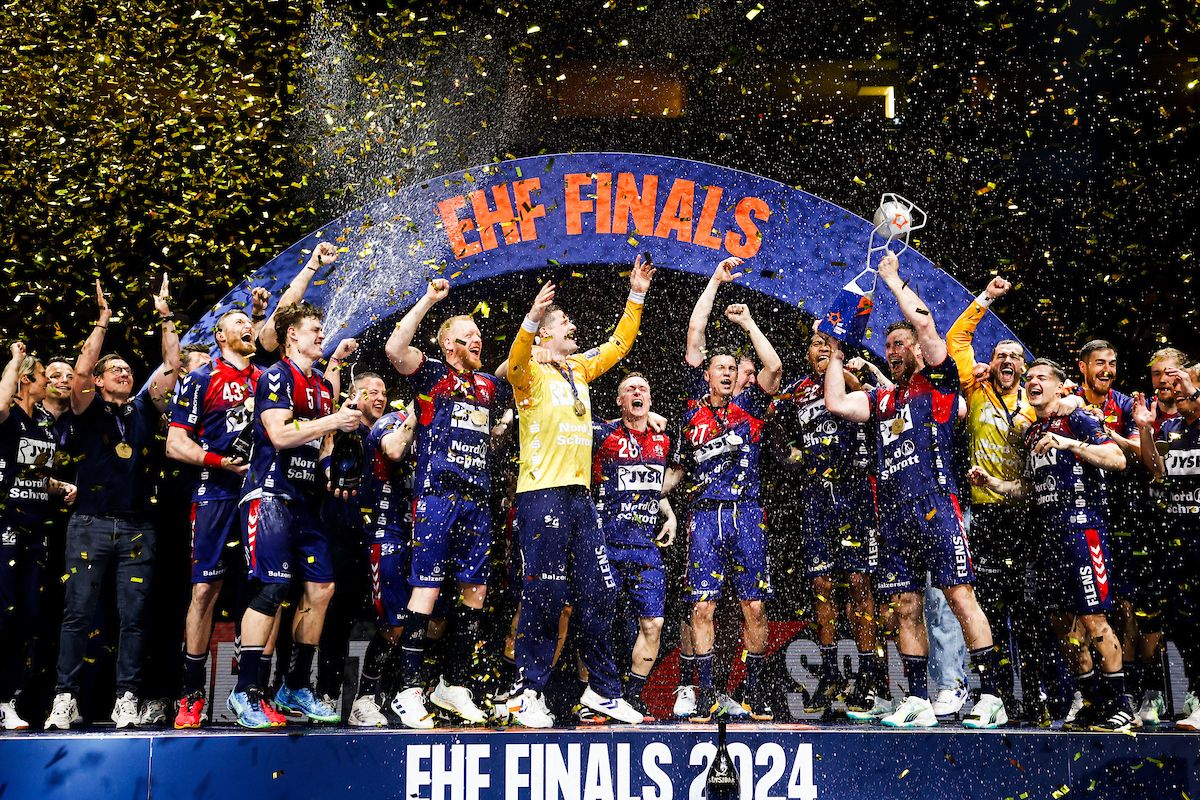
Flensburg, a club that knows this competition better than almost anyone, have opened their European campaign with three victories and an astonishing combined goal difference of +32.
It is difficult to imagine a more convincing start.
Their squad quality, experience, physical strength and tactical discipline put them on a different level from most of the teams currently competing in the tournament.
Even when the Champions League dropouts enter the competition in the second part of the season, the identity of the main favourites should remain unchanged.
They come from the German-Danish border.
And their name is SG Flensburg-Handewitt.