Dejan Milosavljev on the Kielce switch: “More energy for the biggest games of the season”

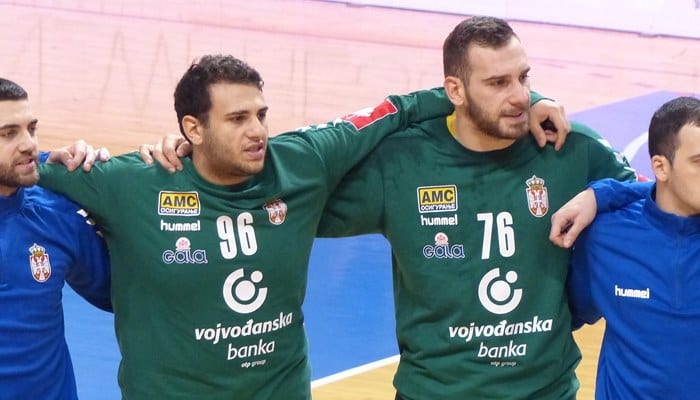
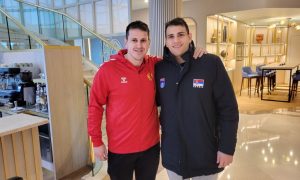
World-class and the main individual trump card of the Serbia national team, Dejan Milosavljev, spoke to Balkan-Handball.com about his decision to leave Berlin and the Bundesliga and move to Poland’s Kielce, as well as the upcoming EHF EURO 2026, where the “Eagles” will play in Herning, Denmark, in a group with Spain, Germany, and Austria.
“I’m happy to be here. I hope I’ll be healthy for the start of the championship and that I’ll play. My head is great; there are a couple of issues I’m carrying over from the club in terms of my body, but that will wait for the break at the end of the season to get resolved. I feel good mentally, and that’s the most important thing right now.”
Was it hard to stay focused given that the saga around staying or leaving Berlin stretched through much of the autumn…
“At the beginning of the season, I had—not pressure, but an unclear situation with Berlin. I didn’t feel good, and it affected some of my performances, whether I admit it or not. The moment I cleared everything up with Berlin and signed with Kielce, I felt better. I have peace, I took the burden off my shoulders, and the focus is only on handball.”
How much was the decision to leave the Bundesliga at the age of 30 also based on moving to an “easier” league in order to protect your health?
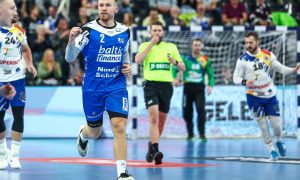
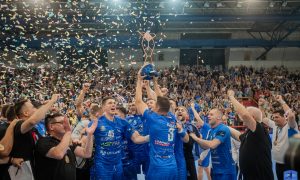
“When we analyze it, I’d go back to Vardar. There I won the EHF Champions League and I imagined the next step would be the Bundesliga. Now I’ve rounded off both the Bundesliga and the EHF Champions League. I played seven seasons in the strongest league in the world and won a lot of trophies. Now the goal until the end of the season is the German Cup, but also reaching the Final4 of the EHF Champions League. In Germany, days pass quickly, breaks are short; I’m in the best years of my career and I want to give more time to my family—my wife and kids. I want to have more time for them; my presence means a lot to them. I believe that in Kielce I’ll be able to achieve that, so we can be together more. I’ll have freshness and extra motivation for EHF Champions League matches, more energy for the most important games of the season, and in the end that will bring something good.”
As for your club career, most things are more or less “ticked off.” What still needs to be ticked off with the national team? How do you feel—fulfilled or unfulfilled when it comes to the national team?
“I’d love, at one tournament, to string together three good matches. That’s very hard, almost impossible—only a few have managed it. Usually, it’s carried by a duo. My primary goal is to help the team. My focus is on myself—to do everything possible to help the guys, to give them a tailwind so that we win, if possible, all three games. It matters to me to play well, to have some of the matches from the qualifiers repeated in those five days, so the guys feel security from our side.”
You’re the biggest star of the team—world class—and that’s confirmed by selections as well; you’re among the four best in the world according to Handball-Planet.com. Do you feel pressure that you have to give more than others?
“No team can achieve success or a big result without a goalkeeper. I do feel pressure, but I’d like my teammates not to rely too much on goalkeepers, but to focus on their tasks that they need to carry out. Our defenses will come, and I’d like their focus to be on every ball—every rebound, every save, every shot. I have pressure; it’s not easy for me to play for Serbia. At the club it’s completely different—there are many matches, good and bad, ups and downs. The national team drains me a lot physically and mentally. I have great desire, and now I also have a lot of experience—good and bad moments—and I hope I’ll take a lesson from everything for myself.”
What are Serbia’s chances of reaching the main round?
“Everything depends on our game—we have everything in our hands. The group is very tough, but we can find our way. The opening will be hard; those 60 minutes are short. We’ll give everything we have; we won’t give up at any moment. Austria is an opponent that suits us—very high quality—and we won’t give up against Spain and Germany either,” concluded Dejan Milosavljev.