Lewis Howes: Handball is perfect for Americans to enjoy and watch – LA 2028 can be a new beginning

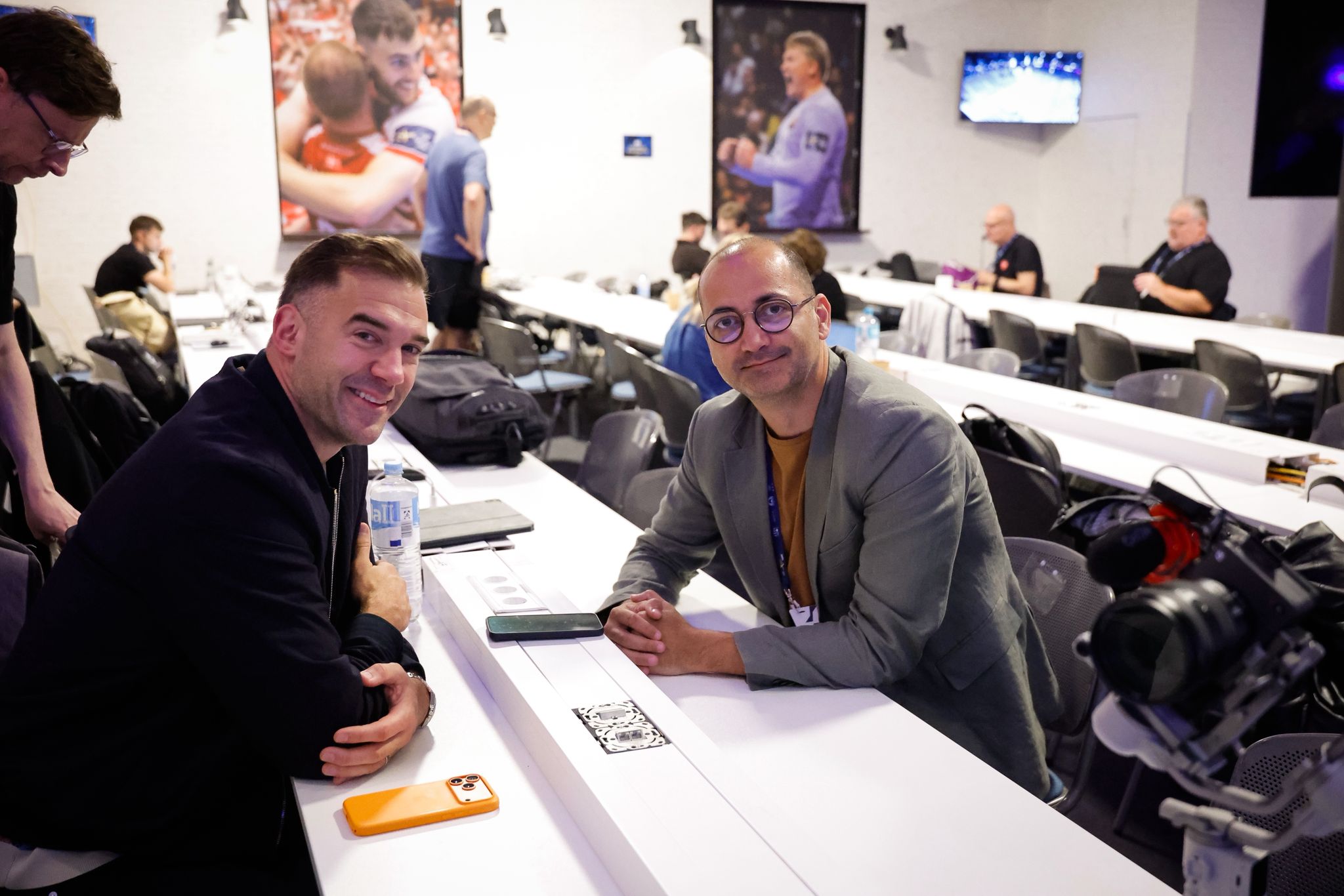
Lewis Howes, founder of the Los Angeles Handball Club and former USA national team player, visited Cologne for the first time during the EHF FINAL4 weekend. For Handball-Planet.com, he spoke about the challenge of growing handball in the United States, his Olympic dream, and why the next two years could define the future of the sport in America.
Is this your first time here in Cologne?
Yes, it is my first time. So far, it has been great. Cologne is a beautiful city. It is not as big as Los Angeles, but it is really nice.
This is considered the capital of European handball. The EHF FINAL4 has been here for 16 years, always in the same arena. What did you know about the event before coming here and what do you expect?
I heard that this is the greatest weekend of handball in the year. This is my first time at the event, but I know that the best players and the best teams are here. It is going to be a very fun competition to watch.
From an American perspective, how does the whole European handball story look to you?
It is really cool to see. Being in an arena like this reminds me of the NBA or NHL experience. In Los Angeles, we have the Lakers and I go to watch them, so I know what big sports production looks like.
Here, it is impressive to see the production, the quality of the facilities and the whole experience around handball. Earlier this year I was in Herning, Denmark, watching the games there during EHF EURO 2026, but everyone told me that Cologne is supposed to be an even better experience. That is why I am very excited to be here.
What can European media, clubs and handball people do to help make handball bigger in the United States?
USA Handball needs a lot of help and a lot of support.
My vision is to be in Europe more often and collaborate with media like yours, with players, teams and managers. I want people to know what I am creating with the Los Angeles Handball Club, but also what USA handball needs in order to continue developing the sport.
Maybe only 500 to 1,000 people play handball in the United States, so it is very, very small. Everyone pays to play. It is amateur, obviously.
But we have some incredible athletes. They watch handball during the Olympics, or they see a highlight on YouTube, and they say: “Wow, what is that sport?” They want to start playing, but we do not have the facilities. We do not have many clubs that practise consistently. That is our biggest challenge.
What is the short-term and long-term plan?
Right now, the plan is to do as much as I can to market the sport in the next couple of years leading into the Olympic Games.
We have a little more than two years until the Olympics, and there will be a lot of attention six months before the Games. My goal is to create as much content, media and marketing as possible to promote handball to Americans, so they are excited about it when the Olympics come.
I do not want Americans to turn on the TV during the Olympics and say: “What is this? This is the first time I have seen this.” I want them to see handball for the next two years, so when the Olympics come, they say: “I want to watch handball. I want to watch it on TV. I want to go to the games. I want to get involved after the Olympics.”
That is my intention.
My first personal goal is to get back on the USA national team and represent my country. I played for the USA national team for 10 years, and then I stopped playing for five years because I got married, had kids, focused on life, business and injuries.
I know that the odds are against me because of my age. I know it is challenging to compete at a high level when you are 45 years old at the time of the Olympics. I know I have to manage injuries and compete against guys who are 23 or 24 years old. That is a challenge.
But if you ever had a big dream, you understand this. If something is calling me from inside and I say, “No, it is too scary, too big, too challenging,” I know I would regret it for the rest of my life.
I have two daughters, seven-month-old twins. Part of my motivation is that I do not want them to grow up and ask me one day: “Dad, why didn’t you go for your dream?”
I would rather fail while going for it than say it was too hard, there were too many challenges with the federation, with my age or with everything else.
That is why I am travelling across the world to be at this event. I am pursuing my dream. I left my kids behind, I have my business, there is a lot of travel and I am exhausted, but I know this is the place to be. This is where I need to be during the FINAL4 in order to continue promoting my dream, building relationships with the right people and connecting with players.
We need to get more players invested in coming to play in the USA. We had great players come before, like Mimi Kraus, Martin Strobel and Viran Morros. For me, we need more quality coming to the USA, playing there, getting excited about it and talking about it in Europe as well.
Otherwise, it will be very hard to develop athletes. Either Americans need to come to Europe and play, or Europeans need to come to the USA and help grow the sport. There are many challenges and only so much you can do at one time, but I am trying to do my best to market the sport, market myself, improve my skills and get back on the national team for the Olympics.
From the American perspective, what is the biggest problem for handball in the USA?
There is no professional league.
But even before that, there is nowhere to watch the game. There is nowhere to watch it on TV. If you cannot see the sport, you cannot understand it. If you can see it, then you can start asking questions: “What is that rule? Why do they jump over the line? What is double dribble?”
But first, you need to see it. In the USA, we do not see handball anywhere.
That is the first problem. It needs to be on TV more. It needs to be on ESPN or other channels where Americans have access to it. During the Olympics, people see handball on TV and say: “This is incredible.” Then they do not see it again for four more years.
Once people can watch it regularly, then they can start understanding the rules. But the sport itself is not hard to understand. Whoever scores more goals wins.
Americans love physical sports. They love fast-paced sports. They love high-scoring sports. Handball is perfect for Americans to enjoy and watch.
But there is no professional league, so there is nowhere to go and watch it live. Even if you want to watch it on TV, you cannot go to your local club in your city and watch the sport. That is hard.
There are no youth programmes, so young athletes are not getting excited because there is nowhere to play. There are no facilities. You have to create a handball court out of two basketball courts or some type of sports complex.
There are so many challenges, and there is not enough money coming into the sport. USA Handball does not really have a lot of money at the moment.
I am raising money through my business, sponsorship partnerships, my podcast The School of Greatness and my social media marketing. I am raising my own sponsorships for the Los Angeles Handball Club and for myself, but I am investing everything back into the team.
I am paying for flights, registration fees, practice court time, equipment, jerseys — everything myself. It is expensive and it is not sustainable. There are not many people who can do that.
I am trying to build a professional-style club while we are still an amateur team. I bring in former Olympians and ask them: “How can I improve? How can I make this better?” They tell me that what we are doing is really cool, that we are creating energy, attitude and a feeling of professionalism, even though it is still an amateur club.
That is my goal: how can we make it feel professional without spending a lot of money?
Relationships matter. People feel when you are trying to add value to the handball community, and that is what I am trying to do. I am sure I will make mistakes, but I want to do my part to expand the sport as much as possible.
How do you see the progress of handball in the USA in the next few years? LA 2028 is a huge chance, but there is also life after the Olympics. Is it a new beginning or a new chapter?
It is either going to start or it is going to die, based on what the USA Federation does over the next two years.
If they do not start doing the right things to help the sport grow, if they do not start raising money, if they do not start making the right choices, then the USA may not do well at the Olympics.
I hope they do well, but they may struggle. And if they struggle at the Olympics, I think it is going to be a sad day for USA Handball, because I do not think there will be more sponsors and more excitement if the team does not perform well.
I think there could be less interest. That is the challenge – concludes Lewis Howes.