“If Kadetten Played the Champions League, I’d Have Stayed Forever”

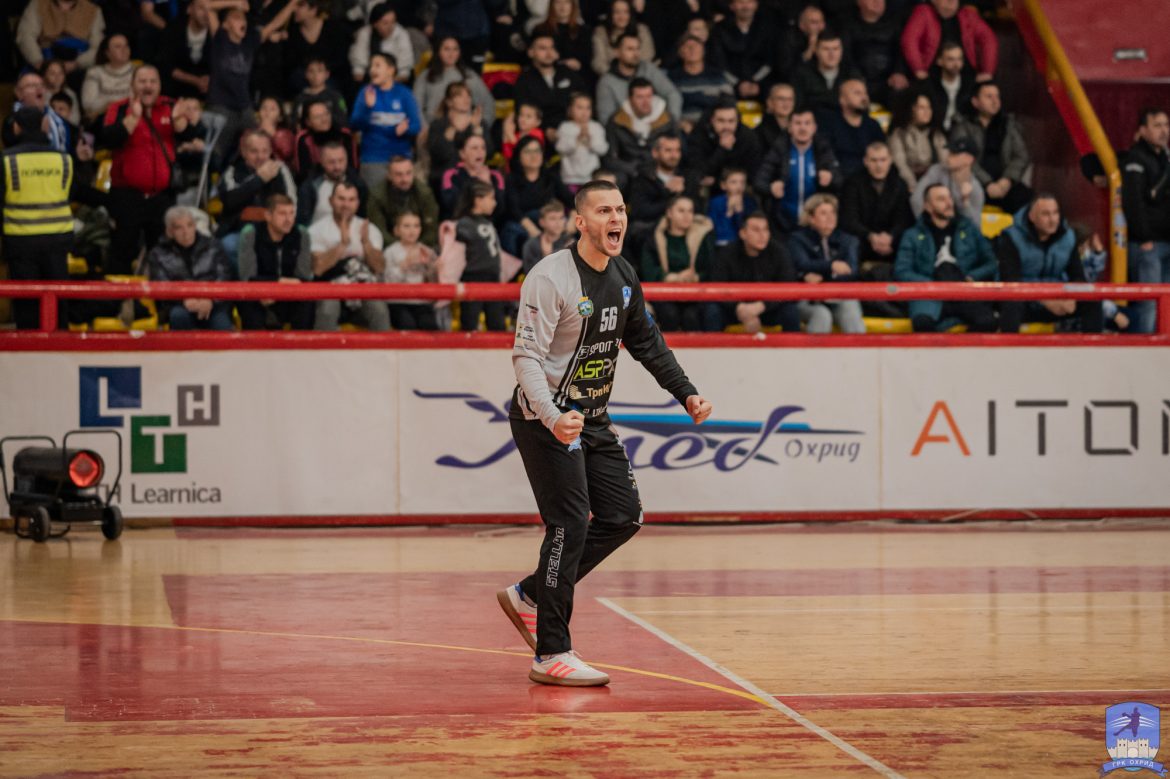
Kristijan Pilipović explains why he left a “10-year home” in Schaffhausen for Kriens-Luzern’s new project — chasing the Champions League dream, building a winning mentality, and settling the score with his “former love.”
The 31-years old goalie until the end of the season is a member of North Macedonia GRK Ohrid.
Q: Why Switzerland again — and why Kriens-Luzern instead of staying with Kadetten? What were your motives?
Pilipović: It’s hard to describe. At Kadetten I could have stayed for the next 10 years if I wanted to. I genuinely had a great status there. When I came back from Wisła, they told me: “We’ll do whatever it takes — extend contracts for guys like Rikardsson, Pietraśik — everything, so we can play the Champions League.”
That was always my dream: to play the Champions League. That’s the biggest thing. The Bundesliga was never my main desire — the Champions League was. But it didn’t happen: not the first year, not the second. Then Kolstad and Elverum got in, we didn’t have the lobby, Đorđo Ber got tired of handball, and I’m looking at myself thinking: I’m 27–28, I already tasted the Champions League with Wisła. I wanted to feel that again.
I believe I have the quality to goalkeep at that level — I just need the right project. That wasn’t happening there, and I don’t think it will happen at Kadetten for the next 5–6 years either, unless they get in for a season because of an expansion from 16 to 24 clubs.
I saw in Ohrid that there was an idea — a project — that you could go far, win the league and play the Champions League. But my good friend Nik Tominec called me and said: “Pipo, I need a goalkeeper who knows how to win the Swiss championship.” Someone who won’t come in as a star who can’t be bothered to face teams like Zürich and make 15 saves — but someone who will stand in goal and do the job.
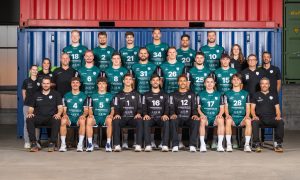
My “handball father” Michael Draca — who is the godfather of my children — is in Luzern. We’re very close. Bilyk signed. Herburger signed. Schelker as well. I was roommates with Šipa (Marin Šipić) in Nexe. Nik was my teammate. Something is being built.
If Kadetten played the Champions League every year, I would never have left them — believe me, never. But players have been leaving for exactly that reason. So now we’ve all gathered in Lucerne to take down Kadetten and play the Champions League. That’s the main motive: to take the trophy from my former love — and to fulfill my dream.
Q: Is this Kriens team, still being built, strong enough for the dominance to permanently move from Schaffhausen to Luzern?
Pilipović: At Kadetten we had this feeling: you start a season and you already know you’ll win it. They brought in Schmid, but the mindset was: “Doesn’t matter — we’re stronger.” We had that swagger: we’re the team.
Knowing Bilyk, Herburger, Šipić — I think we’ll have that same attitude toward Kadetten. I’m sure of it, and it’s my job to bring that mentality into the whole story.
In terms of individual quality: Bilyk is the strongest player who has ever signed for a club in Switzerland. If he’s a bit fresher after being squeezed in the Bundesliga, he’ll be the best player in the league. When Šipa comes back, we’ll be at a very high level in attack.
I haven’t seen anything from Marko (Milosavljević) yet, but I hope he returns to form after surgery and joins fully. From what I’ve heard, he can be top class — and I believe he can reach that level. If you have him and Bilyk, that’s huge quality.
What’s missing is one playmaker to complete the project — a playmaker who brings calm in crunch time. That’s what we need if we want to win the league in the next three years.
Schelker has big potential — we played together — but he hasn’t really played for three years. He had a spell in Wetzlar, then two ACL injuries. That’s a risk. Maybe Bilyk covers some of it, but we still need that piece — and also a right back, depending on whether Orbović stays.
If we bring those reinforcements, then Kadetten won’t have a chance — they don’t have the quality on that line, especially at back and pivot. They have Rikhardsson, but he needs the ball in his hands to make things happen.
Q: What is a player of Rikhardsson’s level still doing outside the Champions League and the biggest clubs?
Pilipović: In short: he has a very good contract. Five or six players there have really good deals. His wife works, the living conditions are great, it’s a nice city.
Berlin called him — But still no. Here he can do whatever he wants: he can shoot behind the back a hundred times. It’s like he won the lottery — a well-paid job for the next 10 years where he can keep doing his circus unconditionally.
I know him very well. Offensively he’s top 3 wings in the world. I even texted him during the championship: “Bro, thank God you don’t take penalties, because Iceland would’ve won both games against Croatia.” He shoots better than Magnússon — no one in Europe has that kind of arm.
The way he plays, how he prepares — he’s a killer. But his issue is competition at the top. He wouldn’t accept playing 45 minutes in Berlin. He has to play 60, he has to take penalties, he has to be the main guy on the court.
Q: How did Kadetten react to your move to Kriens? In Macedonia there would be booing for at least a year or two…
Pilipović: There were some speculations when I was leaving, and then Nik Tominec reached out. I spoke with Giorgo Ber and Graubner — they took it correctly. In the past they sometimes took it personally: “Why are you going there?” But this time they accepted it without any problem.
Business is business. You went to Ohrid, they signed another goalkeeper. I still run my goalkeeper camp in the BBC Arena — for the club owner it’s a fantastic thing for young goalkeepers. I got full support to continue under the same conditions — nothing changes. No hard feelings. In that sense they’re businessmen.
“Too Early for Wisła”
Q: You joined Wisła Płock in summer 2022 and stayed only six months before returning to Kadetten. Was that a mistake, considering Wisła’s squad and ambitions?
Pilipović: I made two mistakes in my career. I wasn’t ready at that moment for the step to Wisła. It was hard for me — hard for us at home too. If things had been good on the court, maybe things at home would’ve been easier as well — I’d have pulled everything to the positive side. It all piled up.
Kadetten heard about it, they were unhappy with their goalkeepers at the time, and a “safe” decision was made. Sporting called me back then too — both before I went to Wisła and after. Everyone advised me to go to Wisła: coaches, my wife, people from the national team. I wanted Sporting, but I didn’t listen to myself.
There’s huge pressure on goalkeepers in Płock, and I wasn’t ready for that. Maybe now I’d be ready and would see things differently. Before me and after me, very few goalkeepers averaged 8–10 saves there. Even bigger names than me — Hallgrímsson, Bergerud — would have two or three saves sometimes, and they came from teams where they made 15. That should be seen in context, and maybe it should protect goalkeepers from criticism or from the wider public’s lack of understanding.
The defense is different — Sabaté’s defense: lots of contact, through the middle, long defensive possessions — it’s hard to keep concentration when shots come after fouls or through heavy traffic. Mirko (Alilović) adapted best. He knows which balls are “his” against that defense and which aren’t.
If Bergerud holds up mentally for another half-season or a season, he’ll come back to his level — 10–12 saves. Ivan Stevanović once told me: “If you make 10–12 saves there, it’s like you scored 10 goals.” Because it’s constant contact: you save, the referee sends it back to nine meters, then a penalty… It’s very specific.
It’s like people saying Mandić and Kuzmanović didn’t have great stats at the tournament — we played a 5–1 defense, and when you look at the shots, they had the hardest job in the tournament. It’s difficult to “solve” that with analysis, preparation, and technique — sometimes you just can’t. I talked to Banda (Dejan Milosavljev) about it — we agreed.
Q: There were a lot of rumors about Bergerud — everyone already saw him in Berlin, but it didn’t click in his first six months…
Pilipović: Hallgrímsson had a role too — one or two good matches and that was it. If I had the mindset I have now back then, I would’ve survived at Wisła. Maybe today I’d be on another level if I had endured, but for that you need a strong head, belief in yourself, support from the head coach and the goalkeeper coach.
If I had shown my full potential in Płock, I would’ve been in the national team through Champions League games — and now I’m trying to find that path in a different way. I’m in the best years for a goalkeeper. We’ll see what Lucerne brings and where the handball road leads.
“I Really Wanted to Play for Croatia — But I Miss My Austrian Generation”
Q: You grew up with Austria’s national team program, then switched to Croatia and debuted at EHF EURO 2022. How do you see that decision now, and do you hope for a call-up in the era of Kuzmanović and Mandić?
Pilipović: You can’t know that two such monsters will appear at that age. They’re incredible for their years — credit to them. Zagreb and Nexe built and projected that. I’m surprised how mature they are in goal at that age. I don’t even want to imagine what they’ll look like in 6–7 years with full maturity and experience. Every goalkeeper told me: “After 30 everything is easier,” and it’s true. I wish them health so they can show their full potential.
The decision to play for Croatia was mine. And you know in life: something you thought was right then, later isn’t. At that moment I had a huge desire to play for Croatia — to tick that off my bucket list. I started handball watching Balić, Metličić, the Croatian national team — the same way new kids will start through our guys who won bronze. I wanted to feel that — and I’m very proud. I have six caps for Croatia and I’m proud that I achieved that without going through cadet and junior national teams, with only ten months at Nexe.
I’ll be completely honest, even if not everyone likes it. For social reasons, I’m sure I shouldn’t have changed national teams. All my friends — Herburger, Bylik, Frimmel, Hutecek — they’re all together now. I know I would be part of that group, and my career would have flowed differently. There’s a togetherness that comes from Fivers. We’re one generation that won the championship and slowly entered the national team — for the 1994 generation Red Bull was the sponsor.
They have it great in the national team: they play without pressure. If they take a scalp, great — if not, nobody cares. That’s why I feel regret. Handball-wise, finishing 7th or 8th at the Euros was a unique success — I don’t know when they’ll do that again. But playing with all of them — handball with friends, underdogs ready to trip anyone — that’s a beautiful environment. That’s the Fivers vibe… the natural environment I came from.
I’m truly proud I became a Croatian international. Hearing the anthem in front of 20,000 people — everyone who saw me in the Croatian jersey — it was special. If I could go back, I’d probably decide the same. But if I could change one thing, I would play for Austria. Something like that.
You always have some hope they’ll call you. I was with Dagur once for Olympic qualifiers, I played okay against Algeria. He told me we’d stay in touch, but I haven’t been on any wider list since. There were many names, so I assume I’m not part of the plan in his era.
I see myself as the older goalkeeper — like Pešić was, now Slavić is. If one of the two is injured or has a fever, I could jump in for 15–20 minutes and accept that role. They need another keeper alongside them for another year or two, but realistically those two will only get stronger and stronger.